Have you ever looked at your birth chart and felt like something was… missing? Perhaps you’ve mastered the basics of your Sun, Moon, and Rising signs. You know your Venus is in Leo and your Mars is in Scorpio, but when you look in the mirror, there are layers of your personality and “soul hunger” that the standard Western tropical wheel doesn’t quite capture.
If you’re nodding your head, you’re not alone. Many of us in the modern astrology community are reaching a point where we crave more than just a personality profile. We want a roadmap for our soul’s evolution. This is where the ancient wisdom of the Nakshatras and the Lunar Nodes (Rahu and Ketu) comes into play. By integrating these “hidden” elements into our modern understanding of astrology, we move from simply knowing who we are to understanding why we are here and how to achieve true karmic unity.
What Are Nakshatras? The “Original” Zodiac
Most of us are familiar with the 12 signs of the Zodiac—Aries through Pisces. These are based on the sun’s path throughout the year. However, long before the 12-sign system became the global standard, ancient seers were looking at the Moon.
The Moon moves through the entire zodiac in about 27.3 days. To track this, ancient Vedic astrology divided the sky into 27 “Lunar Mansions,” known as Nakshatras. Each Nakshatra spans 13 degrees and 20 minutes, offering a much more granular and precise look at your psyche than a 30-degree Sun sign ever could.
Why Nakshatras Matter Today
In modern life, we are often overwhelmed by choices. We struggle with finding our “calling” or understanding why we repeat the same relationship patterns. The Nakshatras act as a microscope. While your Moon sign (say, Taurus) tells us you value stability, your Nakshatra (such as Rohini or Krittika) tells us the specific flavor of that stability.
- Rohini seekers might find growth through artistic creation and nurturing.
- Krittika seekers might find it through “cutting away” what no longer serves them with surgical precision.
Understanding these nuances is a game-changer for anyone looking for personal growth and clarity. It’s the difference between having a general map of a country and a GPS that shows you every hidden alleyway in your neighborhood.
The Lunar Nodes: Rahu and Ketu, the Architects of Fate
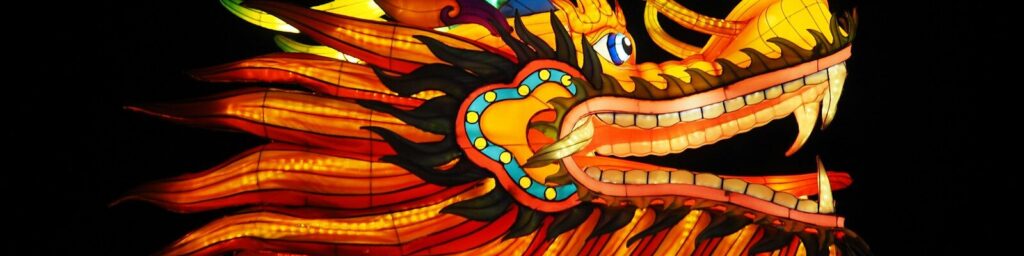
If the Nakshatras are the “landscape” of our soul, the Lunar Nodes are the “engine” that drives us across it. In Western astrology, these are often called the North Node and the South Node. In the Vedic tradition, they are known as Rahu and Ketu—the head and tail of the celestial dragon.
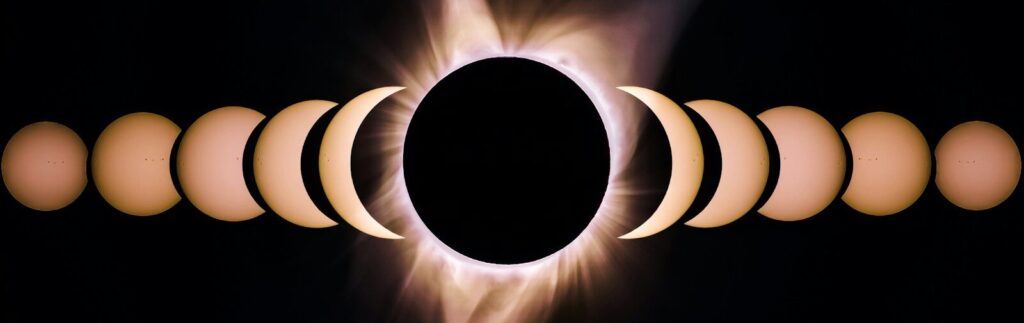
Unlike the planets, the Nodes are not physical bodies. They are mathematical points where the orbit of the Moon intersects the ecliptic (the path of the Sun). Because they involve the two “luminaries” of our sky, their influence on our lives is profound.
Ketu: The Gift of the Past
Ketu, the South Node, represents our “cosmic inheritance.” It’s what we’ve already mastered in past lives or inherited through our ancestral DNA. Ketu is where we are naturally talented, but it’s also where we are most prone to stagnation.
In a modern natal chart, Ketu often points to our “comfort zones.” It’s that thing you’re really good at but that feels strangely empty or unfulfilling. To achieve karmic unity, we must acknowledge the gifts of Ketu without getting trapped in its shadows of isolation or apathy.
Rahu: The Hunger for the Future
Rahu, the North Node, is the exact opposite. It represents our soul’s obsession in this lifetime. It is the area of life where we feel like a “newbie”—clumsy, fascinated, and driven to succeed. Rahu is the direction of our future growth. It is where we are meant to innovate and push boundaries.
For many seeking astrology for personal growth, Rahu provides the “why” behind our most intense desires. If your Rahu is in the 10th House, you might feel an insatiable drive for career recognition. If it’s in the 7th, your soul is here to learn the complex dance of partnership.
If you’re feeling a bit overwhelmed by these new terms, don’t worry. The journey of self-discovery is a marathon, not a sprint. A great way to start piecing this together is by connecting with a community that understands these nuances. For those looking to dive deeper, you can find incredible resources and a supportive community by subscribing to Astrology SA. We offer tailored insights into your unique cosmic blueprint.
Bridging the Gap: Integrating Vedic Wisdom into a Western Chart
You don’t have to choose between Western and Vedic astrology. In fact, some of the most insightful modern practitioners use a “hybrid” approach. They use the Western tropical chart to understand the personality and psychological makeup, then look to the Nakshatras and the Nodes to understand the karmic path.
The Three Purposes of the Nakshatras
Each Nakshatra is classified by its Gana (temperament), which tells us how we interact with the world:
- Deva (Divine): These individuals tend to be naturally refined, kind, and focused on spiritual growth. Their challenge is often dealing with the “harshness” of the material world.
- Manushya (Human): These souls are here to experience the full spectrum of human emotion, from ambition to love to grief. They are often the hardest workers.
- Rakshasa (Demon/Intense): Don’t let the name scare you! This simply means the individual has a very strong, intense energy. They are often the ones who break old systems and bring about radical change.
Knowing which “Gana” your Moon falls into can explain why you might feel out of sync with your peers. It provides a level of self-acceptance that is incredibly healing.

The Nodes and Career: Finding Your “North Star”
One of the most common questions people ask astrologers is, “What am I supposed to be doing with my life?”
Modern life often pressures us to follow a linear path: school, job, retirement. But the Lunar Nodes suggest a more “spiral” path. Often, our greatest career success comes when we lean into our Rahu (North Node) placement, even if it feels terrifying.
For example, if your North Node is in Ashwini Nakshatra (the first Nakshatra, associated with healing and speed), you might find that you are constantly “restarting” your career or working in fast-paced medical or tech environments. Even if your Sun sign is a “slow and steady” Taurus, your Nakshatra will give you an underlying drive for innovation and quick results.
Overcoming the “Ketu Trap”
The biggest hurdle to personal growth is often our own talent. Because we are so good at our Ketu (South Node) activities, we often stay there because it’s “safe.” We might stay in a job we hate because we’re the best at it.
The hidden role of the Nodes is to remind us that safety is not the same as fulfillment. To achieve the clarity we seek, we have to be willing to be “bad” at something new (our Rahu) until we master it. This is the essence of soul evolution.

Relationship Alchemy and Nakshatra Compatibility
We’ve all heard of “Sun sign compatibility,” but have you ever wondered why you hit it off with a “wrong” sign? The secret usually lies in the Nakshatras.
Vedic astrology uses a sophisticated point system called Ashta Kuta to measure how two people’s Nakshatras interact.
It looks at:
- Varna: Do you have similar ego-levels?
- Yoni: Is there a natural physical/biological attraction?
- Gana: Do your temperaments clash or complement?
This is why two people who “should” work according to their Sun signs often find themselves constantly bickering, or why an unlikely pair feels like “soulmates.” The Nakshatras reveal the deep-seated subconscious triggers that either bind us together or push us apart.
Practical Steps: How to Use This Information Today
You don’t need to become a scholar to start benefiting from this knowledge.
Here is how you can begin integrating these concepts into your life for better decision-making and clarity:
- Identify Your Moon’s Nakshatra: Use a Vedic chart calculator to find your Nakshatra. Read about its “shakti” (power) and its “deity.” This will give you a new “archetype” to work with.
- Locate Your Rahu and Ketu: Look at the houses they occupy. Your Ketu house is where you need to set boundaries and let go of perfectionism. Your Rahu house is where you need to take more risks.
- Track the Transits: When a major planet (like Saturn or Jupiter) crosses over your natal Rahu or Ketu, expect a massive shift in your life direction. These are “karmic crossroads.”
Exploring these depths can be a solitary journey, but it’s much more rewarding with a guide. If you’re looking for a community that values this kind of deep dive into the self, subscribe to the Astrology SA newsletter. It’s a wonderful way to receive consistent, reliable advice that helps you align your daily actions with your higher purpose.
Conclusion: Achieving Karmic Unity
The “hidden” role of Nakshatras and Lunar Nodes in modern natal charts is to act as a bridge between our mundane lives and our spiritual potential. In a world that often feels chaotic and disconnected, these tools offer a sense of order. They remind us that we aren’t just random people bumping into each other—we are souls on a very specific, beautiful, and sometimes challenging trajectory.
When we understand our Nakshatras, we understand our unique rhythm. When we understand our Nodes, we understand our direction. Together, they help us stop fighting against our nature and start flowing with the cosmic current.
Personal growth isn’t about becoming “perfect”; it’s about becoming whole. By embracing both the light of our Sun signs and the shadow-play of our Lunar Nodes, we find the clarity needed to make smarter, more empowered decisions. The stars aren’t just “up there”—they are a reflection of the vast universe inside of you.
Frequently Asked Questions (FAQ)
What is the difference between a Nakshatra and a Zodiac Sign?
A Zodiac Sign (like Leo or Virgo) is a 30-degree segment of the sky based on the Sun’s path. A Nakshatra is a 13-degree-and-20-minute segment based on the Moon’s path. There are 12 Zodiac Signs but 27 Nakshatras, making Nakshatras much more specific in describing personality and destiny.
How do I find my Nakshatra?
To find your Nakshatra, you need your exact birth date, time, and location. Because most Nakshatras are calculated using the Sidereal (Vedic) zodiac rather than the Tropical (Western) zodiac, your Moon sign might actually shift back by about 24 degrees. It is best to use a specific Vedic astrology calculator or consult a professional.
Are Rahu and Ketu “evil” planets?
Not at all! While ancient texts sometimes use dramatic language, in modern astrology, Rahu and Ketu are seen as teachers. Rahu represents where we need to grow and innovate, while Ketu represents where we need to detach and find spiritual wisdom. They are the “north and south poles” of our soul’s journey.
Can Nakshatras help with career planning?
Yes, immensely. Certain Nakshatras are traditionally linked to specific professions. For example, Revati is often associated with travel and caring for others, while Vishakha is linked to goal-oriented fields like law or politics. Understanding your Nakshatra’s “aim” (Dharma, Artha, Kama, or Moksha) can help you align your career with your soul’s purpose.
Is it better to use Vedic or Western astrology for growth?
Both have incredible value! Western astrology is fantastic for psychological self-awareness and understanding your “inner child.” Vedic astrology, particularly the Nakshatras and Nodes, is excellent for understanding “karmic timing” and your broader life path. Using them together provides the most holistic view.
What does “Karmic Unity” mean?
Karmic unity is the state of being where your external life (your job, relationships, and actions) is in perfect alignment with your internal soul’s purpose. It’s that feeling of being “in the flow,” where life feels meaningful even during challenging times.