In the quiet, often overlooked spaces between who we were and who we are becoming, there exists a specific kind of tension. It is a psychological friction that arises when our old coping mechanisms no longer suffice, yet our new boundaries haven’t quite solidified. In the language of modern astrology, we are currently standing at a generational precipice—a threshold where the collective dissolution of the last several years meets a sudden, sharp demand for individual agency.
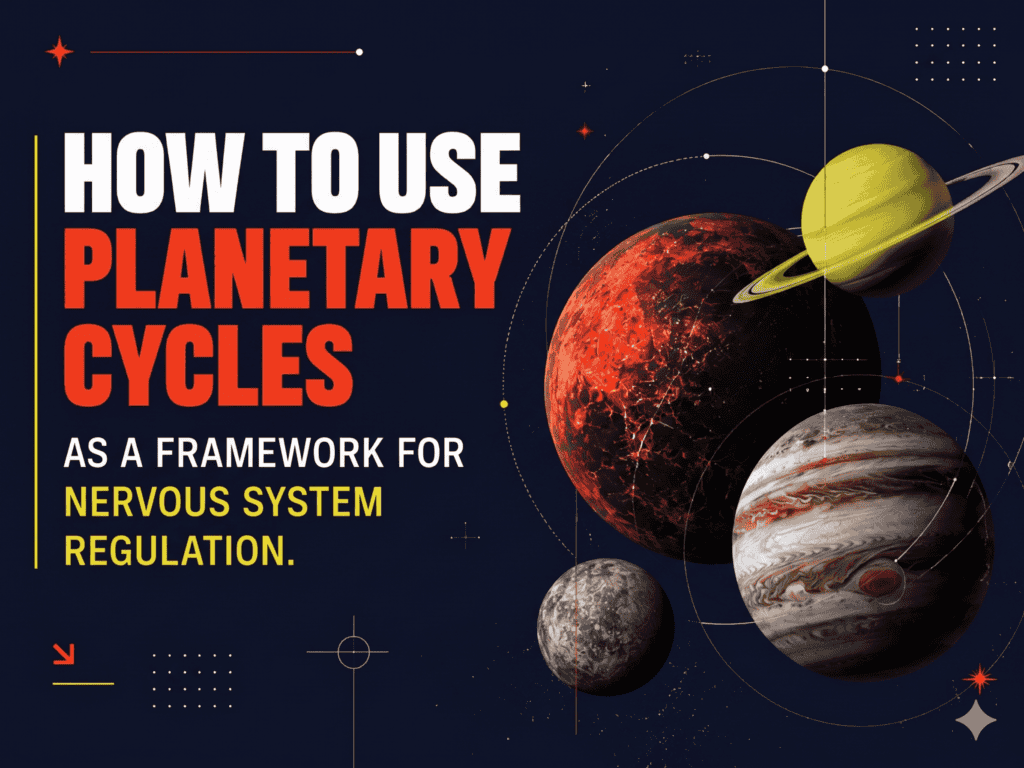
As we move through 2026, we are witnessing an astrological “Great Reset.” The transition of Saturn and Neptune from the final degrees of Pisces into the first degrees of Aries marks the end of a 36-year cycle and the birth of another. For the “Pragmatic Seeker,” this provides a strategic roadmap for navigating burnout, identity shifts, and the essential task of reclaiming one’s life force.
The Dissolution of the Old Guard
Reflections on the Piscean Exit
For the past several years, the presence of Saturn (structure, discipline) and Neptune (dreams, dissolution) in Pisces has felt like navigating a fog. Collectively, we have grappled with a sense of boundarylessness. We have seen the thinning of the veil between the digital and the physical, the rise of “main character syndrome” as a defense mechanism against a chaotic world, and a profound, often wearying emotional permeability.
In this phase, many of us experienced a specific type of existential burnout. This wasn’t just the result of working too hard; it was the result of feeling too much without a container to hold it. When Neptune—the planet of the infinite—and Saturn—the planet of the finite—occupy the same sign, the challenge is to find form within the formless.
As these planets prepare to exit the final sign of the zodiac, the primary task is grief work. Before we can embrace the “New” that Aries promises, we must acknowledge what has dissolved. Whether it is a career path that no longer resonates or a version of yourself that you outgrew during the isolation of the early 2020s, the first step in strategic reinvention is an honest audit of your current emotional landscape.
The Fire of Initiation
Saturn and Neptune in Aries
As Saturn and Neptune cross the threshold into Aries—the first sign of the zodiac—the energy shifts from “surrendering” to “initiating.”
Aries is the archetype of the pioneer, the warrior, and the individual. While Pisces asked us to realize we are all one, Aries asks: “But who are YOU?”
- Saturn in Aries (The Disciplined Will): Saturn’s transit here (beginning in early 2026) demands that we take radical responsibility for our desires. It is no longer enough to wait for permission or for the “vibes” to be right. Saturn in Aries provides the structural integrity needed to build something new, but it requires the maturity to endure the “friction” of beginnings.
- Neptune in Aries (The Visionary Action): Neptune’s presence here adds a layer of spiritual conviction to our movements. It asks us to act not just for the sake of ego, but in alignment with a higher vision. However, the shadow side involves impulsive idealism. The strategic move is to balance Neptune’s vision with Saturn’s pragmatism.
This combination is rare and potent. It suggests that the next few years are not about “manifesting” from a place of lack, but about architecting from a place of presence. It is a call to move from the passenger seat of your life into the driver’s seat, acknowledging that while you cannot control the weather, you are entirely responsible for how you steer the ship.

Pluto in Aquarius
The Deconstruction of the Digital Self
Parallel to this shift is the long-term residence of Pluto in Aquarius. This transit is fundamentally reshaping how we understand community, technology, and our own intellectual sovereignty.
We are moving away from the top-down power structures of the past (Capricorn) and into a decentralized, network-based reality. For the individual, this creates a unique pressure: how do we remain authentic in an era of algorithmic saturation?
The psychological shift here involves moving away from external validation and toward internal coherence. Pluto in Aquarius asks us to “debug” our mental operating systems. Are your beliefs truly your own, or are they a collection of curated opinions you’ve inherited from your social feed? Navigating this transit requires a high degree of emotional intelligence and a commitment to intellectual independence.
The Strategy of Timing
From Awareness to Integration
Astrology is most effective when it moves beyond the theoretical and into the practical. Understanding that a major cycle is ending is one thing; knowing how it hits your specific life is another.
For the modern reader, the goal is to use these cycles as a nervous system regulation tool. When we understand the “weather” of our lives, we stop blaming ourselves for the storms. If you are in a “Saturn year,” characterized by contraction and hard work, trying to force a “Jupiter experience” of expansion will only lead to frustration and burnout.
Practical Applications for the Current Transits:
- Audit Your Energy Leaks: With the North Node moving toward the Pisces/Virgo axis later this year, the focus shifts to the intersection of ritual and health. Where are you performing labor that isn’t yours to do?
- Reclaim the “Beginner’s Mind”: As Aries energy rises, give yourself permission to be “bad” at something new. The Saturn-Neptune conjunction rewards those who are willing to build slowly from the ground up.
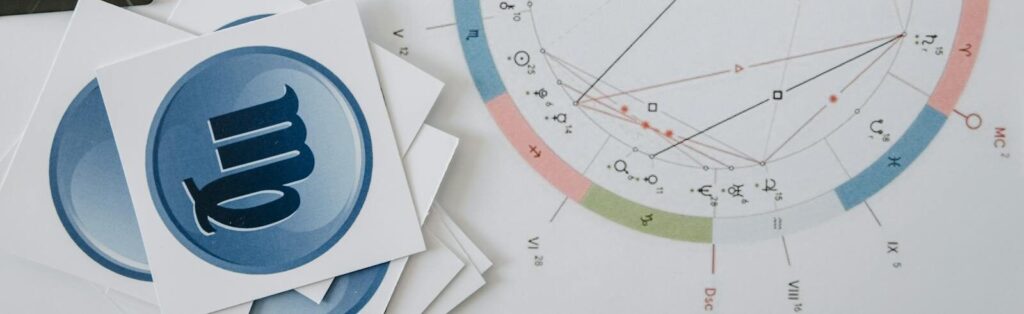
- Track Your Personal Cycles: General horoscopes provide the “weather report” for the city, but your birth chart is the “climate” of your home. Tracking how transits hit your specific houses—particularly the areas of career (10th house) and self (1st house)—allows for surgical precision in decision-making.
The Shift Toward Intentional Living
We are exiting an era of “passive” astrology. The days of checking a horoscope to see if a “tall, dark stranger” will appear are being replaced by a much more sophisticated use of the craft. Modern seekers are using astrology as a system for intentional living.
This involves:
- Journaling through lunations to track emotional patterns.
- Setting boundaries based on Saturnian cycles.
- Planning major launches or life changes around Venus and Mars retrogrades.
By treating astrology as a framework for understanding patterns rather than a crystal ball, we regain our agency. We move from wondering what will happen to us to deciding who we will be in the face of what is happening.
Conclusion
The New Frontier
The transits of 2026 are an invitation to stop waiting for the world to settle down and to instead find our own center of gravity. As the fog of the last few years clears, the path forward is marked by a renewed sense of self-sovereignty. The “Great Reset” is not a collective event that happens to you; it is a personal invitation to redefine your boundaries, clarify your vision, and take the first disciplined steps toward a life that feels authentic to your core.
In this new era, the most valuable resource you have is your own attention. Use it wisely.
Next steps from here
Navigating these generational shifts requires more than just intellectual understanding. It requires a consistent practice of reflection and a reliable way to track the timing of your own life.
For those who wish to move beyond the surface level of astrology and engage with it as a practical tool for self-awareness, we often recommend the ecosystem built by Chani Nicholas. Their approach mirrors our own: astrology that is grounded, psychologically sophisticated, and deeply actionable.
Through the Chani Website and App, readers can access personalized transit tracking that shows exactly how these major shifts—like the Saturn-Neptune conjunction—are interacting with their unique birth charts. For a more immersive experience, their workshops and podcasts offer weekly context that helps translate the “sky weather” into strategic life insights.
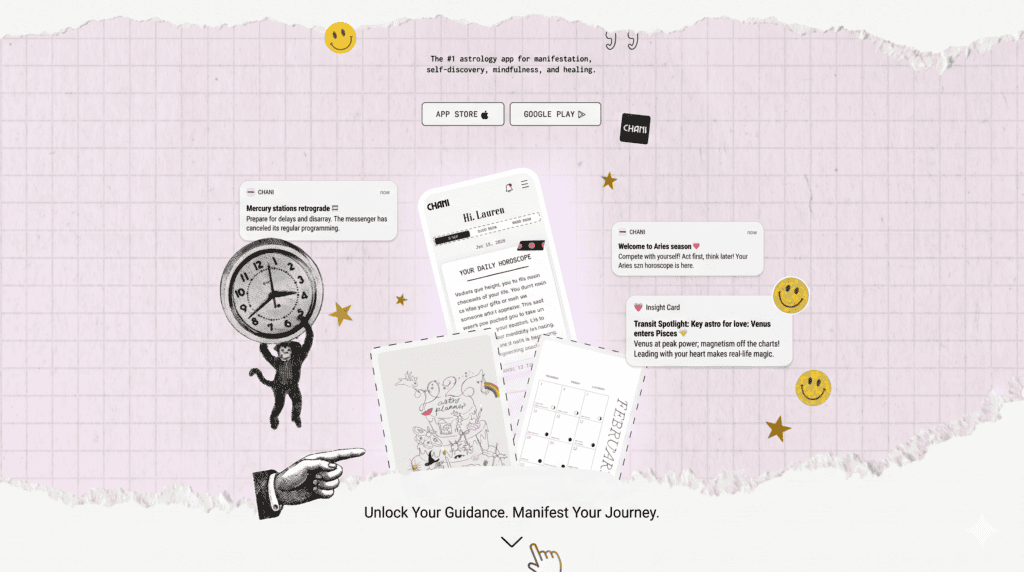
Whether you are deep-diving into your “Year Ahead” with one of their books or using their integrated journaling features to regulate your nervous system during a retrograde, the Chani platform serves as a premium companion for the intentional seeker. It is a structured, beautiful, and highly intelligent way to stay grounded as the world evolves.
6. FAQ Section
Q: Why does the Saturn-Neptune conjunction in Aries matter for my career? A: Saturn represents structure and Neptune represents vision. In Aries, this duo asks you to build a career based on your true identity rather than societal expectations. It’s a prime time for “pioneering” a new role or business, provided you have the Saturnian discipline to see it through.
Q: How can I use astrology for nervous system regulation? A: By tracking transits (particularly those of the Moon and Mars), you can identify periods where your energy may be lower or your stress response may be higher. Knowing a “high-tension” transit is coming allows you to proactively schedule rest and avoid over-commitment.
Q: What is “transit tracking” and how is it different from a horoscope? A: A horoscope is a general forecast for a sun sign. Transit tracking looks at where the planets are right now in relation to your specific birth chart. It provides “surgical” insight into which specific area of your life (e.g., finances, relationships, or home) is currently being activated.
Q: Is Pluto in Aquarius going to change how we use technology? A: Yes. Pluto’s 20-year journey through Aquarius is expected to decentralize power and reshape our digital identities. Psychologically, it’s about moving away from “groupthink” and finding your unique contribution to the collective.
Q: How do I know if I’m experiencing “Saturn themes” or just burnout? A: Saturn themes often feel like a “squeeze” or a heavy responsibility that forces you to mature. While burnout feels like a lack of resources, a Saturn transit often provides a clear (if difficult) path toward building better boundaries so that the burnout doesn’t happen again. Using a personalized tool like the Chani App can help you identify if a specific Saturn transit is currently hitting your chart.
Q: What is the best way for a beginner to start using astrology practically? A: Start with the Moon cycles. Tracking how you feel during a New Moon (intention setting) versus a Full Moon (release) is the simplest way to see astrology working in your real life. From there, move into tracking your “Saturn Return” or major outer-planet transits.