The Architecture of Ambition
The Intersection of Vision and Reality
In the modern push for self-optimization, we are often sold the myth of the “perfect moment.” We wait for a specific transit to clear, a retrograde to end, or a New Moon to signal the start of a project. However, for the pragmatic seeker, astrology is not a wait-and-see game. It is a framework for building.
The most profound shifts in our lives rarely happen because the stars “aligned” in our favor. They happen because we understood the structural requirements of the time and met them with equal discipline. To move with authority in the world, one must master the tension between two fundamental archetypal forces: the visionary (Neptune) and the architect (Saturn).

The Alchemical Balance: Saturn and Neptune
In psychological astrology, Saturn represents the boundary, the bone, and the budget. It is the planet of “no,” of limits, and of the tangible results that come only through time and effort. Neptune, conversely, represents the infinite, the dissolution of boundaries, and the dream that has not yet taken form.
Most people live in one extreme or the other. The “dreamer” spends years in the Neptunian fog, conceptualizing brilliant futures that never find a floor to land on. The “grinder” lives entirely in Saturn’s world, building structures that are structurally sound but spiritually hollow.
Strategic growth requires the synthesis of both. It asks: How do we give our dreams a skeleton? When we look at the long-form cycles of our lives—the transits that last years rather than days—we are being asked to audit where our vision lacks structure and where our structures lack soul.
Astrology as a Tool for Stewardship
We often hear the word “manifestation” used as a shorthand for attracting what we want. But from a grounded, editorial perspective, a more accurate term is Stewardship.
Stewardship is the recognition that our time, energy, and talents are resources to be managed with precision. Astrology provides the “when,” but stewardship provides the “how.” When we track planetary cycles, we aren’t just looking for good news; we are looking for the weather report so we know which tools to pack.
For instance, a Saturn transit to a career point (the Midheaven) is rarely “lucky.” It is often heavy. It demands more responsibility, more hours, and more integrity. But for the strategist, this is the most valuable time of all. It is the period where the foundation is poured. If you know the “heavy” weather is coming, you don’t complain about the rain—you build a better roof.
Reflecting on these cycles is a powerful first step, but the true transformation happens in the daily practice of tracking. Understanding your personal timing requires a place to capture the data—a container for the intersection of your life and the stars.
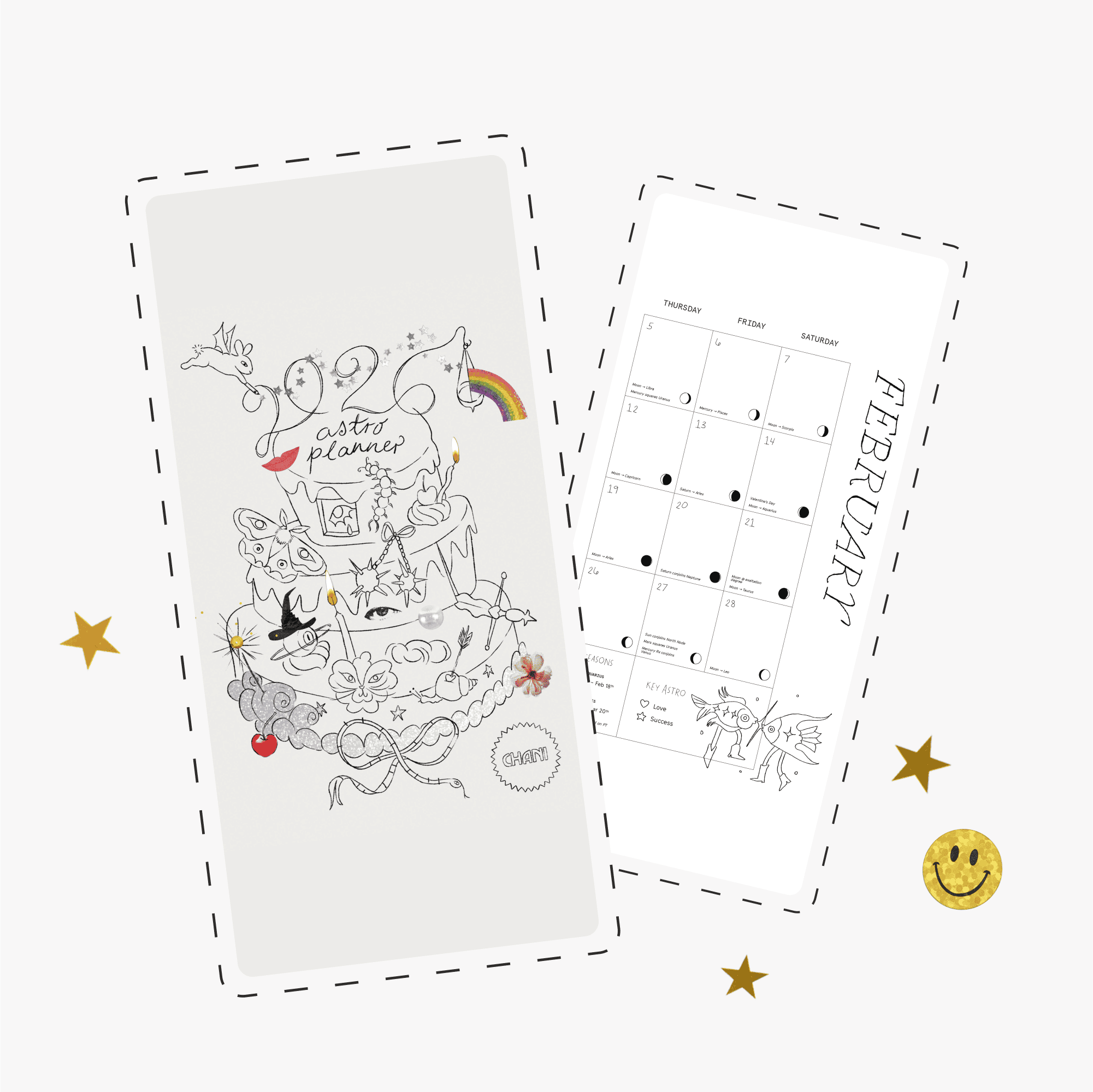
For the reader who values both depth and utility, the Chani Digital Astro Planner is an excellent companion. It offers a structured, minimalist system for tracking transits and lunar cycles in real-time, allowing you to move from theory to integration.
It is a tool designed for those who prefer to navigate their lives with a map rather than a blindfold, providing a clear space to document how the collective shifts are manifesting in your unique world.
Navigating the Liminal Space: The Power of the Pause
One of the most misunderstood aspects of astrological timing is the “void” or the “retrograde.” In a culture that prioritizes constant forward motion, these periods feel like inconveniences. In reality, they are mandatory structural breaks.
Every system—whether it is a biological organism or a corporate entity—requires a period of integration. In astrology, retrograde cycles are the natural “buffer” in the system. They are the moments when the data of the previous months is processed.
If you are currently in a period where clarity feels elusive, the strategic move is not to push harder. It is to practice Active Waiting. This is not passivity; it is the act of refining the infrastructure while the external world is quiet. It is the time to:
- Audit your digital and physical boundaries.
- Review the ROI of your current commitments.
- Listen for the “quiet signal” beneath the noise of daily demands.
The Strategic Audit: A Practical Framework
To use astrology as a reflective tool rather than entertainment, you must be willing to engage with it as a strategist would. This requires a shift from “What will happen to me?” to “What is this cycle asking me to master?”
Consider the following audit for your current season:
- The Structural Check: Where in your life are you operating without a clear system? Saturn rewards the organized.
- The Visionary Check: Is your current ambition still resonant, or are you chasing a goal that Neptune has already dissolved?
- The Timing Check: Are you trying to “launch” during a season that is clearly meant for “revision”?

Moving Toward Maturity
Ultimately, the goal of engaging with deep astrology is the development of psychological and spiritual maturity. It is the ability to stand in the center of uncertainty and remain grounded because you understand the cyclic nature of reality.
The stars do not compel; they suggest a rhythm. Those who learn to dance to that rhythm find that life feels less like a series of accidents and more like a deliberate composition. Whether you are navigating a career transition, a relationship shift, or a personal re-evaluation, the blueprint is already there. Your task is simply to pick up the tools and begin the work.
Integrating these insights into a high-pressure schedule requires a dedicated system. The Chani Digital Astro Planner is designed for the reader who values this kind of precision. It moves beyond generic guidance, offering a structured, minimal space to track your personal transits and lunar rhythms alongside your daily commitments.
If you’ve reached a point where you want to move from reading about astrology to actively applying it as a strategic discipline, the planner acts as an essential companion. It provides the clarity needed to see the patterns in your life as they unfold, helping you stay grounded in your goals while remaining aligned with the sky’s shifting architecture.
Frequently Asked Questions
How can I use astrology to make better professional decisions?
Astrology is best utilized as a timing and diagnostic tool rather than a crystal ball. By tracking planetary transits—the movement of current planets in relation to your birth chart—you can identify high-friction periods (ideal for auditing and refinement) and high-flow periods (ideal for launching and expansion). For instance, a transit of Jupiter through your 10th house often signals a period of public visibility, making it a strategic time to seek a promotion or increase your professional footprint.
What is the difference between my “Sun sign” and my personal transits?
While your Sun sign represents your core identity, it is only one piece of your astrological architecture. Personal transits provide a hyper-local weather report of how current planetary movements are specifically triggering your unique chart. Relying solely on general horoscopes is like checking the national weather when you only need to know if it’s raining on your street. Tracking your personal transits allows for much more precise strategic maneuvering.
How do I navigate periods of “Neptunian fog” in my career?
Neptune transits often manifest as a loss of direction or a temporary dissolution of certainty. While this can be unsettling for high-achievers, the strategic response is to lean into non-linear growth. Avoid making major structural commitments when the “fog” is thick. Instead, use these periods for creative research, psychological inquiry, and spiritual recalibration. Clarity usually returns once the transit passes, often with a more authentic vision than you had before.
Why is tracking lunar cycles relevant for grounded, pragmatic goals?
The lunar cycle is a natural 28-day productivity loop. The period from the New Moon to the Full Moon (the waxing phase) is an archetypal time for building, adding, and initiating. The period from the Full Moon to the next New Moon (the waning phase) is designed for editing, releasing, and closing projects. Aligning your workflow with this rhythm prevents burnout and ensures you aren’t trying to “harvest” when you should be “planting.”
What should I do when an astrological transit feels “heavy” or restrictive?
Heavy transits—often associated with Saturn—are the most valuable periods for long-term success. They act as a stress test for your systems. If a transit brings restriction, it is usually highlighting a structural weakness in your life or career. Rather than resisting the weight, use it to practice discipline. Excellence built during a difficult transit is almost always permanent, whereas “easy” growth can often be fleeting.
How do I handle Mercury Retrograde without the usual “clichés”?
Forget the “don’t sign contracts” warnings; a more strategic approach is to view the retrograde as a mandatory audit. Mercury Retrograde is a feature of our orbital mechanics designed to catch errors. Use these three-week windows to back-test your strategies, reorganize your digital infrastructure, and reconnect with past collaborators. If you must sign a contract, simply do so with a heightened Saturnian level of due diligence.